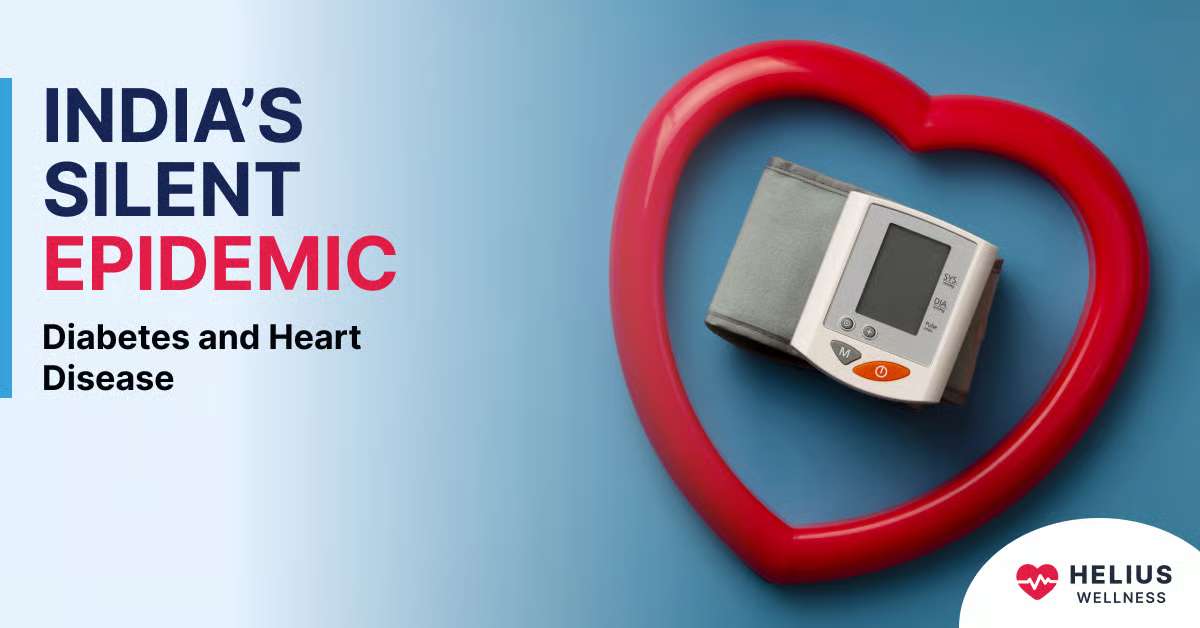
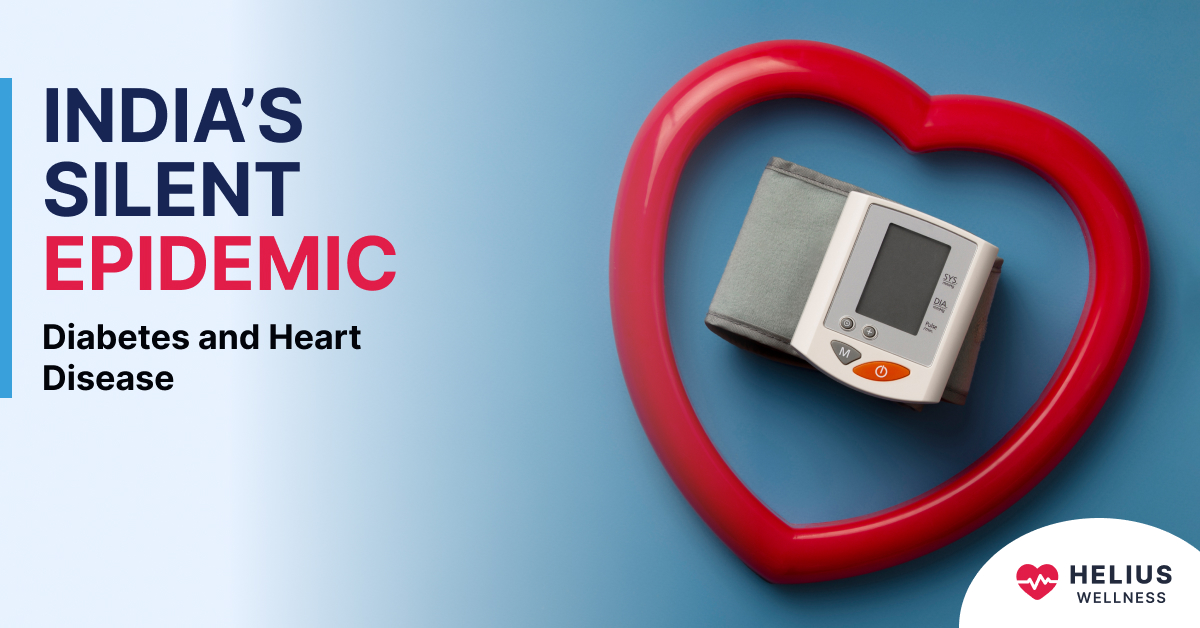


India's Silent Epidemic: Why Diabetes and Heart Disease Are Now India's Deadliest Combination
89.8 million Indians have diabetes. Most are carefully managing blood sugar while their hearts go entirely unwatched. This is what the silence is costing and how to break it.
Author:
Kavya Dave
India is now the world's second-largest diabetic population. 89.8 million adults. By 2050, that number will cross 156 million. The IDF's 2024 Atlas calls it one of the fastest-growing health crises in recorded history.
But the number that matters most isn't in those headlines!
People with diabetes in India are 2 to 4 times more likely to develop cardiovascular disease. And when both conditions are present, Indians die younger than diabetics anywhere else in the world.
In 2024 alone, over 334,000 deaths in India were due to diabetes, and the majority involved some cardiovascular condition.
This is not a coincidence. It is biology. And India sits right at its centre.
Table of Contents
1. Why are Indian bodies more vulnerable?
2. The silence is the symptom
3. What actually breaking this cycle looks like
4. FAQs
Why are Indian bodies more vulnerable?
Indians develop both diabetes and heart disease at a younger age and at a lower body weight than Western populations.
A 40-year-old Indian man with a "normal" BMI can carry significantly more visceral fat (the fat stored around internal organs) than a European with the same reading. This is the "thin-fat Indian" or “skinny-fat Indian” phenomenon. It is well-documented. And it is almost absent from standard screening protocols.
Visceral fat drives insulin resistance. Insulin resistance damages arterial walls. Arterial damage sets the stage for coronary artery disease. This chain runs early. It runs silently. And urban Indians with desk jobs, refined-carb diets, and minimal movement are triggering it faster than any previous generation.
The silence is the symptom
Ask most Indian families how they talk about diabetes and heart disease. Often, the answer is: they don't.
"Don't tell the relatives."
"It's just an age thing."
"We're managing it."
“There’s no need for medication.”
This silence is costing lives. Not metaphorically. Measurably.
Diabetes in its early stages produces almost no symptoms. High blood sugar quietly erodes arterial walls over the years. Diabetic cardiomyopathy, the weakening of the heart muscle caused by chronic elevated glucose, progresses with no chest pain, no breathlessness, and no signs. By the time symptoms appear, the structural damage is already done.
Add to this a cultural habit of self-management. Less sugar in the chai. Methi overnight. A walk after dinner. These aren't wrong. But they are often chosen instead of a diagnosis, not alongside one. And that gap between awareness and medical action is where this epidemic lives.
The system is built for emergencies, not prevention
India's healthcare infrastructure is reactive by design. You develop chest pain. You see a cardiologist.
But with diabetic heart disease, chest pain often arrives last or not at all.
Diabetic neuropathy blunts pain perception. Silent ischemia, reduced blood flow to the heart with zero discomfort, is significantly more common in diabetics than in the general population.
The diagnostic gap compounds this further. Most patients receive a diabetes diagnosis from their general practitioner and are never simultaneously screened for cardiac risk. Endocrinology and cardiology operate in separate silos.
There is no standard Indian protocol that says: You have type 2 diabetes, therefore here is what your heart looks like right now.
The result is millions of Indians carefully managing their blood sugar, while their hearts go entirely unwatched.
The cardiac picture your diabetes check-up isn't giving you:
Super ECG by Helius Wellness generates an AI-powered, plain-language summary; no cardiologist visit required to understand it. It detects silent arrhythmias, early ischemic patterns, and heart rate variability markers that standard annual ECGs miss entirely. Designed specifically for people managing diabetes and metabolic risk in India.
Learn more about Super ECG -->
What actually breaking this cycle looks like
Prevention here is not about generic wellness advice. It is about asking different questions and monitoring the right things continuously, not once a year.
If you have type 2 diabetes, the most important conversation you are not having with your doctor is about your cardiac markers. Your HbA1c and your cardiovascular risk score must be reviewed together. One without the other is half a picture.
If you are over 35 with a family history of either condition, early cardiac screening is overdue. The South Asian genetic risk profile means the standard global guideline does not apply to you. Ask for a cardiac risk assessment the next time you go in for your diabetes review. Today, not next year.
If you are managing a parent or spouse with diabetes and cardiovascular risk, ask what their heart looks like right now. Not because something is wrong. Because that question, asked early enough, is exactly how you prevent something from going wrong.
Summary
The data on this epidemic has existed for fifteen years. Biology has been understood for longer. The only thing that has consistently failed is the gap between knowing and acting.
You now have the knowledge. The next step is one scan away.
Know what your heart is doing before it tells you itself.
Super ECG by Helius Wellness gives you a complete, AI-powered cardiac summary in plain language. No hospital visit. No waiting. No guessing.
Book your Super ECG screening today!
Preventive. Non-invasive. Designed for India.
FAQs
1. Why are diabetes and heart disease so dangerous together in Indians?
Chronic high blood sugar damages arterial walls, causing inflammation and plaque build-up that leads to coronary artery disease. Indians are also genetically predisposed to higher visceral fat and insulin resistance, even at normal body weight, which accelerates arterial damage significantly faster than in Western populations.
The result: Indians develop this dangerous combination at a younger age and with fewer visible warning signs.
2. What is diabetic cardiomyopathy, and why does it have no symptoms?
It is the progressive weakening of the heart muscle caused by sustained high blood sugar, independent of blocked arteries or high blood pressure. It develops silently because diabetic neuropathy (nerve damage) blunts the pain signals that would normally alert you. Most people discover it only when the heart's pumping function has already declined.
Continuous monitoring is the only reliable way to catch it early.
3. At what age should Indians with diabetes get cardiac screening?
Global guidelines recommend cardiac screening from age 45. For South Asians, especially those with type 2 diabetes, a family history of heart disease, or abdominal obesity, the threshold drops to 35 or earlier. Annual diabetes check-ups do not include cardiac risk assessment by default.
Ask your physician specifically for a cardiovascular risk evaluation alongside your HbA1c.
4. Can controlling blood sugar actually reduce heart disease risk?
Yes, and the evidence is strong. Sustained reduction in HbA1c measurably slows arterial damage and reduces cardiac event risk. In early-stage type 2 diabetes, lifestyle interventions combined with medical management have reversed insulin resistance markers in multiple studies. The critical variable is time: the earlier the intervention, the greater the protection.
Blood sugar control and cardiac monitoring are not separate goals; they are equal.
5. What is silent ischemia, and why are diabetics more at risk?
Silent ischemia is reduced blood flow to the heart that causes no chest pain or discomfort. Diabetics are significantly more prone to it because neuropathy disrupts the pain signals that make ischemia detectable. More than half of cardiac events in diabetics are preceded by silent ischemia, which is why monitoring, not symptom-awareness, is the only protective strategy.
6. How is Super ECG different from a standard ECG?
A standard ECG captures a snapshot of heart activity at a single moment and typically requires a cardiologist to interpret the output.
Super ECG provides a more comprehensive reading with an AI-generated plain-language summary so you understand your cardiac health without needing a specialist appointment. It is designed for preventive use and is especially relevant for people managing diabetes, in whom cardiac risk is elevated and often silent.







India’s first AI-powered NCD diagnostics network.
Follow Us


Helius Wellness 2026. All Rights Reserved
India's Silent Epidemic: Why Diabetes and Heart Disease Are Now India's Deadliest Combination
89.8 million Indians have diabetes. Most are carefully managing blood sugar while their hearts go entirely unwatched. This is what the silence is costing and how to break it.
Author:
Kavya Dave
India is now the world's second-largest diabetic population. 89.8 million adults. By 2050, that number will cross 156 million. The IDF's 2024 Atlas calls it one of the fastest-growing health crises in recorded history.
But the number that matters most isn't in those headlines!
People with diabetes in India are 2 to 4 times more likely to develop cardiovascular disease. And when both conditions are present, Indians die younger than diabetics anywhere else in the world.
In 2024 alone, over 334,000 deaths in India were due to diabetes, and the majority involved some cardiovascular condition.
This is not a coincidence. It is biology. And India sits right at its centre.
Table of Contents
1. Why are Indian bodies more vulnerable?
2. The silence is the symptom
3. What actually breaking this cycle looks like
4. FAQs
Why are Indian bodies more vulnerable?
Indians develop both diabetes and heart disease at a younger age and at a lower body weight than Western populations.
A 40-year-old Indian man with a "normal" BMI can carry significantly more visceral fat (the fat stored around internal organs) than a European with the same reading. This is the "thin-fat Indian" or “skinny-fat Indian” phenomenon. It is well-documented. And it is almost absent from standard screening protocols.
Visceral fat drives insulin resistance. Insulin resistance damages arterial walls. Arterial damage sets the stage for coronary artery disease. This chain runs early. It runs silently. And urban Indians with desk jobs, refined-carb diets, and minimal movement are triggering it faster than any previous generation.
The silence is the symptom
Ask most Indian families how they talk about diabetes and heart disease. Often, the answer is: they don't.
"Don't tell the relatives."
"It's just an age thing."
"We're managing it."
“There’s no need for medication.”
This silence is costing lives. Not metaphorically. Measurably.
Diabetes in its early stages produces almost no symptoms. High blood sugar quietly erodes arterial walls over the years. Diabetic cardiomyopathy, the weakening of the heart muscle caused by chronic elevated glucose, progresses with no chest pain, no breathlessness, and no signs. By the time symptoms appear, the structural damage is already done.
Add to this a cultural habit of self-management. Less sugar in the chai. Methi overnight. A walk after dinner. These aren't wrong. But they are often chosen instead of a diagnosis, not alongside one. And that gap between awareness and medical action is where this epidemic lives.
The system is built for emergencies, not prevention
India's healthcare infrastructure is reactive by design. You develop chest pain. You see a cardiologist.
But with diabetic heart disease, chest pain often arrives last or not at all.
Diabetic neuropathy blunts pain perception. Silent ischemia, reduced blood flow to the heart with zero discomfort, is significantly more common in diabetics than in the general population.
The diagnostic gap compounds this further. Most patients receive a diabetes diagnosis from their general practitioner and are never simultaneously screened for cardiac risk. Endocrinology and cardiology operate in separate silos.
There is no standard Indian protocol that says: You have type 2 diabetes, therefore here is what your heart looks like right now.
The result is millions of Indians carefully managing their blood sugar, while their hearts go entirely unwatched.
The cardiac picture your diabetes check-up isn't giving you:
Super ECG by Helius Wellness generates an AI-powered, plain-language summary; no cardiologist visit required to understand it. It detects silent arrhythmias, early ischemic patterns, and heart rate variability markers that standard annual ECGs miss entirely. Designed specifically for people managing diabetes and metabolic risk in India.
Learn more about Super ECG -->
What actually breaking this cycle looks like
Prevention here is not about generic wellness advice. It is about asking different questions and monitoring the right things continuously, not once a year.
If you have type 2 diabetes, the most important conversation you are not having with your doctor is about your cardiac markers. Your HbA1c and your cardiovascular risk score must be reviewed together. One without the other is half a picture.
If you are over 35 with a family history of either condition, early cardiac screening is overdue. The South Asian genetic risk profile means the standard global guideline does not apply to you. Ask for a cardiac risk assessment the next time you go in for your diabetes review. Today, not next year.
If you are managing a parent or spouse with diabetes and cardiovascular risk, ask what their heart looks like right now. Not because something is wrong. Because that question, asked early enough, is exactly how you prevent something from going wrong.
Summary
The data on this epidemic has existed for fifteen years. Biology has been understood for longer. The only thing that has consistently failed is the gap between knowing and acting.
You now have the knowledge. The next step is one scan away.
Know what your heart is doing before it tells you itself.
Super ECG by Helius Wellness gives you a complete, AI-powered cardiac summary in plain language. No hospital visit. No waiting. No guessing.
Book your Super ECG screening today!
Preventive. Non-invasive. Designed for India.
FAQs
1. Why are diabetes and heart disease so dangerous together in Indians?
Chronic high blood sugar damages arterial walls, causing inflammation and plaque build-up that leads to coronary artery disease. Indians are also genetically predisposed to higher visceral fat and insulin resistance, even at normal body weight, which accelerates arterial damage significantly faster than in Western populations.
The result: Indians develop this dangerous combination at a younger age and with fewer visible warning signs.
2. What is diabetic cardiomyopathy, and why does it have no symptoms?
It is the progressive weakening of the heart muscle caused by sustained high blood sugar, independent of blocked arteries or high blood pressure. It develops silently because diabetic neuropathy (nerve damage) blunts the pain signals that would normally alert you. Most people discover it only when the heart's pumping function has already declined.
Continuous monitoring is the only reliable way to catch it early.
3. At what age should Indians with diabetes get cardiac screening?
Global guidelines recommend cardiac screening from age 45. For South Asians, especially those with type 2 diabetes, a family history of heart disease, or abdominal obesity, the threshold drops to 35 or earlier. Annual diabetes check-ups do not include cardiac risk assessment by default.
Ask your physician specifically for a cardiovascular risk evaluation alongside your HbA1c.
4. Can controlling blood sugar actually reduce heart disease risk?
Yes, and the evidence is strong. Sustained reduction in HbA1c measurably slows arterial damage and reduces cardiac event risk. In early-stage type 2 diabetes, lifestyle interventions combined with medical management have reversed insulin resistance markers in multiple studies. The critical variable is time: the earlier the intervention, the greater the protection.
Blood sugar control and cardiac monitoring are not separate goals; they are equal.
5. What is silent ischemia, and why are diabetics more at risk?
Silent ischemia is reduced blood flow to the heart that causes no chest pain or discomfort. Diabetics are significantly more prone to it because neuropathy disrupts the pain signals that make ischemia detectable. More than half of cardiac events in diabetics are preceded by silent ischemia, which is why monitoring, not symptom-awareness, is the only protective strategy.
6. How is Super ECG different from a standard ECG?
A standard ECG captures a snapshot of heart activity at a single moment and typically requires a cardiologist to interpret the output.
Super ECG provides a more comprehensive reading with an AI-generated plain-language summary so you understand your cardiac health without needing a specialist appointment. It is designed for preventive use and is especially relevant for people managing diabetes, in whom cardiac risk is elevated and often silent.
India’s first AI-powered NCD diagnostics network.
Helius Wellness 2026. All Rights Reserved
Follow Us
India's Silent Epidemic: Why Diabetes and Heart Disease Are Now India's Deadliest Combination
89.8 million Indians have diabetes. Most are carefully managing blood sugar while their hearts go entirely unwatched. This is what the silence is costing and how to break it.
Author:
Kavya Dave
India is now the world's second-largest diabetic population. 89.8 million adults. By 2050, that number will cross 156 million. The IDF's 2024 Atlas calls it one of the fastest-growing health crises in recorded history.
But the number that matters most isn't in those headlines!
People with diabetes in India are 2 to 4 times more likely to develop cardiovascular disease. And when both conditions are present, Indians die younger than diabetics anywhere else in the world.
In 2024 alone, over 334,000 deaths in India were due to diabetes, and the majority involved some cardiovascular condition.
This is not a coincidence. It is biology. And India sits right at its centre.
Table of Contents
1. Why are Indian bodies more vulnerable?
2. The silence is the symptom
3. What actually breaking this cycle looks like
4. FAQs
Why are Indian bodies more vulnerable?
Indians develop both diabetes and heart disease at a younger age and at a lower body weight than Western populations.
A 40-year-old Indian man with a "normal" BMI can carry significantly more visceral fat (the fat stored around internal organs) than a European with the same reading. This is the "thin-fat Indian" or “skinny-fat Indian” phenomenon. It is well-documented. And it is almost absent from standard screening protocols.
Visceral fat drives insulin resistance. Insulin resistance damages arterial walls. Arterial damage sets the stage for coronary artery disease. This chain runs early. It runs silently. And urban Indians with desk jobs, refined-carb diets, and minimal movement are triggering it faster than any previous generation.
The silence is the symptom
Ask most Indian families how they talk about diabetes and heart disease. Often, the answer is: they don't.
"Don't tell the relatives."
"It's just an age thing."
"We're managing it."
“There’s no need for medication.”
This silence is costing lives. Not metaphorically. Measurably.
Diabetes in its early stages produces almost no symptoms. High blood sugar quietly erodes arterial walls over the years. Diabetic cardiomyopathy, the weakening of the heart muscle caused by chronic elevated glucose, progresses with no chest pain, no breathlessness, and no signs. By the time symptoms appear, the structural damage is already done.
Add to this a cultural habit of self-management. Less sugar in the chai. Methi overnight. A walk after dinner. These aren't wrong. But they are often chosen instead of a diagnosis, not alongside one. And that gap between awareness and medical action is where this epidemic lives.
The system is built for emergencies, not prevention
India's healthcare infrastructure is reactive by design. You develop chest pain. You see a cardiologist.
But with diabetic heart disease, chest pain often arrives last or not at all.
Diabetic neuropathy blunts pain perception. Silent ischemia, reduced blood flow to the heart with zero discomfort, is significantly more common in diabetics than in the general population.
The diagnostic gap compounds this further. Most patients receive a diabetes diagnosis from their general practitioner and are never simultaneously screened for cardiac risk. Endocrinology and cardiology operate in separate silos.
There is no standard Indian protocol that says: You have type 2 diabetes, therefore here is what your heart looks like right now.
The result is millions of Indians carefully managing their blood sugar, while their hearts go entirely unwatched.
The cardiac picture your diabetes check-up isn't giving you:
Super ECG by Helius Wellness generates an AI-powered, plain-language summary; no cardiologist visit required to understand it. It detects silent arrhythmias, early ischemic patterns, and heart rate variability markers that standard annual ECGs miss entirely. Designed specifically for people managing diabetes and metabolic risk in India.
Learn more about Super ECG -->
What actually breaking this cycle looks like
Prevention here is not about generic wellness advice. It is about asking different questions and monitoring the right things continuously, not once a year.
If you have type 2 diabetes, the most important conversation you are not having with your doctor is about your cardiac markers. Your HbA1c and your cardiovascular risk score must be reviewed together. One without the other is half a picture.
If you are over 35 with a family history of either condition, early cardiac screening is overdue. The South Asian genetic risk profile means the standard global guideline does not apply to you. Ask for a cardiac risk assessment the next time you go in for your diabetes review. Today, not next year.
If you are managing a parent or spouse with diabetes and cardiovascular risk, ask what their heart looks like right now. Not because something is wrong. Because that question, asked early enough, is exactly how you prevent something from going wrong.
Summary
The data on this epidemic has existed for fifteen years. Biology has been understood for longer. The only thing that has consistently failed is the gap between knowing and acting.
You now have the knowledge. The next step is one scan away.
Know what your heart is doing before it tells you itself.
Super ECG by Helius Wellness gives you a complete, AI-powered cardiac summary in plain language. No hospital visit. No waiting. No guessing.
Book your Super ECG screening today!
Preventive. Non-invasive. Designed for India.
FAQs
1. Why are diabetes and heart disease so dangerous together in Indians?
Chronic high blood sugar damages arterial walls, causing inflammation and plaque build-up that leads to coronary artery disease. Indians are also genetically predisposed to higher visceral fat and insulin resistance, even at normal body weight, which accelerates arterial damage significantly faster than in Western populations.
The result: Indians develop this dangerous combination at a younger age and with fewer visible warning signs.
2. What is diabetic cardiomyopathy, and why does it have no symptoms?
It is the progressive weakening of the heart muscle caused by sustained high blood sugar, independent of blocked arteries or high blood pressure. It develops silently because diabetic neuropathy (nerve damage) blunts the pain signals that would normally alert you. Most people discover it only when the heart's pumping function has already declined.
Continuous monitoring is the only reliable way to catch it early.
3. At what age should Indians with diabetes get cardiac screening?
Global guidelines recommend cardiac screening from age 45. For South Asians, especially those with type 2 diabetes, a family history of heart disease, or abdominal obesity, the threshold drops to 35 or earlier. Annual diabetes check-ups do not include cardiac risk assessment by default.
Ask your physician specifically for a cardiovascular risk evaluation alongside your HbA1c.
4. Can controlling blood sugar actually reduce heart disease risk?
Yes, and the evidence is strong. Sustained reduction in HbA1c measurably slows arterial damage and reduces cardiac event risk. In early-stage type 2 diabetes, lifestyle interventions combined with medical management have reversed insulin resistance markers in multiple studies. The critical variable is time: the earlier the intervention, the greater the protection.
Blood sugar control and cardiac monitoring are not separate goals; they are equal.
5. What is silent ischemia, and why are diabetics more at risk?
Silent ischemia is reduced blood flow to the heart that causes no chest pain or discomfort. Diabetics are significantly more prone to it because neuropathy disrupts the pain signals that make ischemia detectable. More than half of cardiac events in diabetics are preceded by silent ischemia, which is why monitoring, not symptom-awareness, is the only protective strategy.
6. How is Super ECG different from a standard ECG?
A standard ECG captures a snapshot of heart activity at a single moment and typically requires a cardiologist to interpret the output.
Super ECG provides a more comprehensive reading with an AI-generated plain-language summary so you understand your cardiac health without needing a specialist appointment. It is designed for preventive use and is especially relevant for people managing diabetes, in whom cardiac risk is elevated and often silent.

India’s first AI-powered NCD diagnostics network.
Helius Wellness 2026. All Rights Reserved
Follow Us