

July 1, 2026
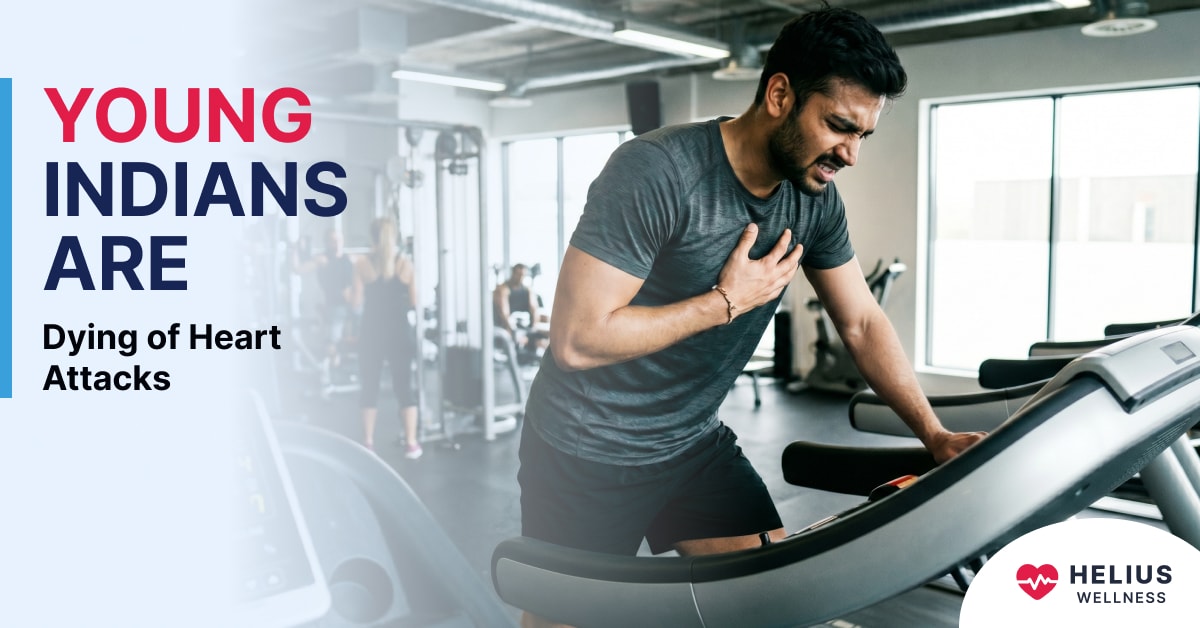
Why Fit, Young Indians Are Dying of Heart Attacks | Hidden Causes & What to Do
"Gym-fit and still at risk? Here's why young Indians are having heart attacks despite clean diets, workouts, and 'normal' ECGs, and what actually protects your heart."
Author:
Paresh Masani
Nobody in Indian healthcare wants to say this out loud:
"Being fit might be giving you a false sense of safety."
Not because exercise is bad for you. It isn't. But somewhere along the way, an entire generation of young Indians believes that gym memberships, protein shakes, and a clean diet are enough to protect their hearts.
And the healthcare system, with its annual ECGs and basic blood panels, quietly agreed. Here, the real problem isn't how young Indians are living. It's what nobody is testing for.
In this blog post, we have busted a few myths around heart health in young Indians. Keep reading to know what you can do about it.
Table of Contents
1. Myth 1: "If I Exercise Regularly, My Heart Is Fine"
2. Myth 2: "A Normal ECG Means I'm Cleared"
3. Myth 3: "Heart Disease Is Something I'll Worry About After 40"
4. Myth 4: "Stress and Poor Sleep Are Minor Issues, Not Real Heart Risks"
5. Myth 5: "I Had COVID, Recovered Fine, So I'm in the Clear"
6. The Real Problem: We Are Testing for What's Already Broken
7. What You Should Do Right Away
8. FAQs
Myth 1: "If I Exercise Regularly, My Heart Is Fine"
This is the most dangerous belief young Indians carry because it feels true.
Exercise is good for your heart. Nobody is arguing otherwise. But here's what the research actually shows: a lean body and a consistent gym routine can mask underlying cholesterol buildup, undetected genetic risk, and silent heart disease that never announces itself until it's too late.
Fitness improves how your heart performs. It does not eliminate what your heart hides.
The people most at risk of a sudden cardiac event are often the ones who feel least at risk precisely because their fitness suppresses symptoms.
The warning signs never come. The heart quietly deteriorates. Then one morning, during a run or a dance performance or a Sunday cricket match, it stops.
Myth 2: "A Normal ECG Means I'm Cleared"
A standard ECG, the test most corporate health check-ups offer, captures a snapshot of your heart's electrical activity at a single moment in time. It detects certain conditions well.
But it misses an entire class of cardiac abnormalities: structural irregularities, mechanical dysfunction, early-stage artery disease, and several rhythm disorders that only show up under specific conditions.
In short, a normal ECG does not mean a healthy heart.
It means your heart looked okay during those thirty seconds.
For young Indians, particularly, this is a critical gap. The standard cardiac screening toolkit being used today was largely designed around older, Western patient profiles. India has a different genetic risk profile, a different disease timeline, and a significantly different disease pattern, and our diagnostic approach hasn't caught up.
Myth 3: "Heart Disease Is Something I'll Worry About After 40"
This threshold of 40 is from Western medicine, built on Western data. It does not apply to Indians.
Research found that young Indians in the 35–45 age group are genetically predisposed to premature coronary artery disease and die of heart disease 10 to 15 years earlier than comparable Western populations.
Apollo Hospitals' data shows that while only 23% of heart disease deaths in Western populations occur before age 70, the figure among Indians is 52%.
Indians worldwide carry a higher genetic propensity toward cardiovascular disease, a reality that often produces no symptoms at all before a sudden cardiac event occurs.
Hence, the window for prevention, for Indians, opens in your late 20s. Not your late 30s.
Myth 4: "Stress and Poor Sleep Are Minor Issues, Not Real Heart Risks"
Young Indian professionals are running on cortisol.
- Twelve-hour work days.
- Startup culture.
- Career pressure.
- Three hours of scrolling before bed.
It is not a productivity problem; it is a cardiac risk.
Chronic stress floods the bloodstream with cortisol and adrenaline. Over time, this elevates blood pressure, accelerates arterial inflammation, and strains the heart's electrical system.
Poor sleep consistently under seven hours increases the risk of a cardiac event, regardless of how healthy you eat or how often you exercise.
Then there are pre-workout supplements and energy drinks: stimulant-loaded products that spike heart rate acutely and, in people with undetected cardiac conditions, can trigger dangerous arrhythmias.
None of these show up on your annual health check-up report. But all of these are quietly damaging your heart.
Myth 5: "I Had COVID, Recovered Fine, So I'm in the Clear"
If you had COVID-19, even a mild case, your heart risk profile may have changed.
Research from multiple peer-reviewed studies found that for up to a year after a COVID-19 infection, the risk of developing a cardiac condition remains substantially elevated. This includes post-viral myocarditis (inflammation of the heart muscle), irregular heartbeat, and in some cases, sudden cardiac death.
The alarming part? Many post-COVID cardiac cases involve people who had no cardiac symptoms during their infection. They recovered. They went back to the gym. They felt normal. But the inflammation existed silently.
Given that an estimated 66 to 70% of India's 1.3 billion population has been infected with COVID-19, the scale of this latent cardiac risk is staggering and almost entirely unaddressed at the level of routine screening.
The Real Problem: We Are Testing for What's Already Broken
Across all five myths runs a single thread: our cardiac screening system is reactive, not proactive.
Standard annual check-ups test for damage after it has begun. Blood pressure, fasting glucose, lipid profiles, and a basic ECG are tools to catch disease once it has already established a foothold. They are not designed to detect what is silently building inside a 28-year-old's arteries.
Advanced cardiac screening tools now exist that go significantly beyond a standard ECG, measuring the heart's electrical, mechanical, and magnetic signals simultaneously, detecting dozens of conditions that a routine test would miss entirely. These tools can identify risk before a cardiac event, not after one.
But most young Indians don't know they exist. And most corporate health packages don't include them.
A standard ECG takes 30 seconds and misses most of what matters.
Super ECG takes 7 minutes and catches the most essential cardiac patterns.
BOOK YOUR SUPER ECG SCREENING NOW! →
What You Should Do Right Away
You don't need to change your life upside down. You need to do one thing: get a proper cardiac screening before you turn 30.
Not a basic ECG. Not a blood pressure check. A comprehensive cardiac evaluation like Super ECG that matches India's risk profile, your genetic predisposition, your post-COVID history, and your real-world stress load.
Being fit is not the same as being heart-healthy. And looking fine is not the same as being fine.
The most dangerous heart attack is the one that comes with no warning.
Get tested before it does!
Disclaimer: This article is for informational purposes only and does not constitute medical advice. Please consult a qualified cardiologist for personalised cardiac health guidance.
FAQs
1. Why are fit young Indians getting heart attacks?
Fitness reduces visible symptoms but does not eliminate underlying cardiac risk. Genetic predisposition, post-COVID myocarditis, chronic stress, stimulant supplements, and diagnostic blind spots, particularly the limitations of standard ECGs, are key factors driving sudden cardiac deaths in young, healthy Indians.
2. At what age should Indians get a cardiac screening?
Research indicates Indians develop coronary artery disease 10–15 years earlier than Western populations. Cardiac screening for Indians, especially those with a family history of heart disease, high-stress lifestyles, or a post-COVID history, is recommended from the late 20s onward.
3. Can a normal ECG miss heart disease?
Yes. A standard ECG captures a narrow snapshot of cardiac electrical activity and misses several conditions, including structural abnormalities, early-stage arterial disease, and mechanical dysfunction. Advanced multi-signal cardiac diagnostics offer a more comprehensive picture.
4. Does COVID-19 increase heart attack risk in young people?
Yes. Studies show that post-COVID myocarditis and elevated cardiac risk can persist for up to a year after infection, even in people who experienced mild symptoms. It is particularly relevant in India, where the majority of the population has been infected.


India’s first AI-powered NCD diagnostics network.
Follow Us


Helius Wellness 2026. All Rights Reserved
July 1, 2026
Why Fit, Young Indians Are Dying of Heart Attacks | Hidden Causes & What to Do
"Gym-fit and still at risk? Here's why young Indians are having heart attacks despite clean diets, workouts, and 'normal' ECGs, and what actually protects your heart."
Author:
Paresh Masani
Nobody in Indian healthcare wants to say this out loud:
"Being fit might be giving you a false sense of safety."
Not because exercise is bad for you. It isn't. But somewhere along the way, an entire generation of young Indians believes that gym memberships, protein shakes, and a clean diet are enough to protect their hearts.
And the healthcare system, with its annual ECGs and basic blood panels, quietly agreed. Here, the real problem isn't how young Indians are living. It's what nobody is testing for.
In this blog post, we have busted a few myths around heart health in young Indians. Keep reading to know what you can do about it.
Table of Contents
1. Myth 1: "If I Exercise Regularly, My Heart Is Fine"
2. Myth 2: "A Normal ECG Means I'm Cleared"
3. Myth 3: "Heart Disease Is Something I'll Worry About After 40"
4. Myth 4: "Stress and Poor Sleep Are Minor Issues, Not Real Heart Risks"
5. Myth 5: "I Had COVID, Recovered Fine, So I'm in the Clear"
6. The Real Problem: We Are Testing for What's Already Broken
7. What You Should Do Right Away
8. FAQs
Myth 1: "If I Exercise Regularly, My Heart Is Fine"
This is the most dangerous belief young Indians carry because it feels true.
Exercise is good for your heart. Nobody is arguing otherwise. But here's what the research actually shows: a lean body and a consistent gym routine can mask underlying cholesterol buildup, undetected genetic risk, and silent heart disease that never announces itself until it's too late.
Fitness improves how your heart performs. It does not eliminate what your heart hides.
The people most at risk of a sudden cardiac event are often the ones who feel least at risk precisely because their fitness suppresses symptoms.
The warning signs never come. The heart quietly deteriorates. Then one morning, during a run or a dance performance or a Sunday cricket match, it stops.
Myth 2: "A Normal ECG Means I'm Cleared"
A standard ECG, the test most corporate health check-ups offer, captures a snapshot of your heart's electrical activity at a single moment in time. It detects certain conditions well.
But it misses an entire class of cardiac abnormalities: structural irregularities, mechanical dysfunction, early-stage artery disease, and several rhythm disorders that only show up under specific conditions.
In short, a normal ECG does not mean a healthy heart.
It means your heart looked okay during those thirty seconds.
For young Indians, particularly, this is a critical gap. The standard cardiac screening toolkit being used today was largely designed around older, Western patient profiles. India has a different genetic risk profile, a different disease timeline, and a significantly different disease pattern, and our diagnostic approach hasn't caught up.
Myth 3: "Heart Disease Is Something I'll Worry About After 40"
This threshold of 40 is from Western medicine, built on Western data. It does not apply to Indians.
Research found that young Indians in the 35–45 age group are genetically predisposed to premature coronary artery disease and die of heart disease 10 to 15 years earlier than comparable Western populations.
Apollo Hospitals' data shows that while only 23% of heart disease deaths in Western populations occur before age 70, the figure among Indians is 52%.
Indians worldwide carry a higher genetic propensity toward cardiovascular disease, a reality that often produces no symptoms at all before a sudden cardiac event occurs.
Hence, the window for prevention, for Indians, opens in your late 20s. Not your late 30s.
Myth 4: "Stress and Poor Sleep Are Minor Issues, Not Real Heart Risks"
Young Indian professionals are running on cortisol.
- Twelve-hour work days.
- Startup culture.
- Career pressure.
- Three hours of scrolling before bed.
It is not a productivity problem; it is a cardiac risk.
Chronic stress floods the bloodstream with cortisol and adrenaline. Over time, this elevates blood pressure, accelerates arterial inflammation, and strains the heart's electrical system.
Poor sleep consistently under seven hours increases the risk of a cardiac event, regardless of how healthy you eat or how often you exercise.
Then there are pre-workout supplements and energy drinks: stimulant-loaded products that spike heart rate acutely and, in people with undetected cardiac conditions, can trigger dangerous arrhythmias.
None of these show up on your annual health check-up report. But all of these are quietly damaging your heart.
Myth 5: "I Had COVID, Recovered Fine, So I'm in the Clear"
If you had COVID-19, even a mild case, your heart risk profile may have changed.
Research from multiple peer-reviewed studies found that for up to a year after a COVID-19 infection, the risk of developing a cardiac condition remains substantially elevated. This includes post-viral myocarditis (inflammation of the heart muscle), irregular heartbeat, and in some cases, sudden cardiac death.
The alarming part? Many post-COVID cardiac cases involve people who had no cardiac symptoms during their infection. They recovered. They went back to the gym. They felt normal. But the inflammation existed silently.
Given that an estimated 66 to 70% of India's 1.3 billion population has been infected with COVID-19, the scale of this latent cardiac risk is staggering and almost entirely unaddressed at the level of routine screening.
The Real Problem: We Are Testing for What's Already Broken
Across all five myths runs a single thread: our cardiac screening system is reactive, not proactive.
Standard annual check-ups test for damage after it has begun. Blood pressure, fasting glucose, lipid profiles, and a basic ECG are tools to catch disease once it has already established a foothold. They are not designed to detect what is silently building inside a 28-year-old's arteries.
Advanced cardiac screening tools now exist that go significantly beyond a standard ECG, measuring the heart's electrical, mechanical, and magnetic signals simultaneously, detecting dozens of conditions that a routine test would miss entirely. These tools can identify risk before a cardiac event, not after one.
But most young Indians don't know they exist. And most corporate health packages don't include them.
A standard ECG takes 30 seconds and misses most of what matters.
Super ECG takes 7 minutes and catches the most essential cardiac patterns.
BOOK YOUR SUPER ECG SCREENING NOW! →
What You Should Do Right Away
You don't need to change your life upside down. You need to do one thing: get a proper cardiac screening before you turn 30.
Not a basic ECG. Not a blood pressure check. A comprehensive cardiac evaluation like Super ECG that matches India's risk profile, your genetic predisposition, your post-COVID history, and your real-world stress load.
Being fit is not the same as being heart-healthy. And looking fine is not the same as being fine.
The most dangerous heart attack is the one that comes with no warning.
Get tested before it does!
Disclaimer: This article is for informational purposes only and does not constitute medical advice. Please consult a qualified cardiologist for personalised cardiac health guidance.
FAQs
1. Why are fit young Indians getting heart attacks?
Fitness reduces visible symptoms but does not eliminate underlying cardiac risk. Genetic predisposition, post-COVID myocarditis, chronic stress, stimulant supplements, and diagnostic blind spots, particularly the limitations of standard ECGs, are key factors driving sudden cardiac deaths in young, healthy Indians.
2. At what age should Indians get a cardiac screening?
Research indicates Indians develop coronary artery disease 10–15 years earlier than Western populations. Cardiac screening for Indians, especially those with a family history of heart disease, high-stress lifestyles, or a post-COVID history, is recommended from the late 20s onward.
3. Can a normal ECG miss heart disease?
Yes. A standard ECG captures a narrow snapshot of cardiac electrical activity and misses several conditions, including structural abnormalities, early-stage arterial disease, and mechanical dysfunction. Advanced multi-signal cardiac diagnostics offer a more comprehensive picture.
4. Does COVID-19 increase heart attack risk in young people?
Yes. Studies show that post-COVID myocarditis and elevated cardiac risk can persist for up to a year after infection, even in people who experienced mild symptoms. It is particularly relevant in India, where the majority of the population has been infected.
India’s first AI-powered NCD diagnostics network.
Helius Wellness 2026. All Rights Reserved
Follow Us
July 1, 2026
Why Fit, Young Indians Are Dying of Heart Attacks | Hidden Causes & What to Do
"Gym-fit and still at risk? Here's why young Indians are having heart attacks despite clean diets, workouts, and 'normal' ECGs, and what actually protects your heart."
Author:
Paresh Masani
Nobody in Indian healthcare wants to say this out loud:
"Being fit might be giving you a false sense of safety."
Not because exercise is bad for you. It isn't. But somewhere along the way, an entire generation of young Indians believes that gym memberships, protein shakes, and a clean diet are enough to protect their hearts.
And the healthcare system, with its annual ECGs and basic blood panels, quietly agreed. Here, the real problem isn't how young Indians are living. It's what nobody is testing for.
In this blog post, we have busted a few myths around heart health in young Indians. Keep reading to know what you can do about it.
Table of Contents
1. Myth 1: "If I Exercise Regularly, My Heart Is Fine"
2. Myth 2: "A Normal ECG Means I'm Cleared"
3. Myth 3: "Heart Disease Is Something I'll Worry About After 40"
4. Myth 4: "Stress and Poor Sleep Are Minor Issues, Not Real Heart Risks"
5. Myth 5: "I Had COVID, Recovered Fine, So I'm in the Clear"
6. The Real Problem: We Are Testing for What's Already Broken
7. What You Should Do Right Away
8. FAQs
Myth 1: "If I Exercise Regularly, My Heart Is Fine"
This is the most dangerous belief young Indians carry because it feels true.
Exercise is good for your heart. Nobody is arguing otherwise. But here's what the research actually shows: a lean body and a consistent gym routine can mask underlying cholesterol buildup, undetected genetic risk, and silent heart disease that never announces itself until it's too late.
Fitness improves how your heart performs. It does not eliminate what your heart hides.
The people most at risk of a sudden cardiac event are often the ones who feel least at risk precisely because their fitness suppresses symptoms.
The warning signs never come. The heart quietly deteriorates. Then one morning, during a run or a dance performance or a Sunday cricket match, it stops.
Myth 2: "A Normal ECG Means I'm Cleared"
A standard ECG, the test most corporate health check-ups offer, captures a snapshot of your heart's electrical activity at a single moment in time. It detects certain conditions well.
But it misses an entire class of cardiac abnormalities: structural irregularities, mechanical dysfunction, early-stage artery disease, and several rhythm disorders that only show up under specific conditions.
In short, a normal ECG does not mean a healthy heart.
It means your heart looked okay during those thirty seconds.
For young Indians, particularly, this is a critical gap. The standard cardiac screening toolkit being used today was largely designed around older, Western patient profiles. India has a different genetic risk profile, a different disease timeline, and a significantly different disease pattern, and our diagnostic approach hasn't caught up.
Myth 3: "Heart Disease Is Something I'll Worry About After 40"
This threshold of 40 is from Western medicine, built on Western data. It does not apply to Indians.
Research found that young Indians in the 35–45 age group are genetically predisposed to premature coronary artery disease and die of heart disease 10 to 15 years earlier than comparable Western populations.
Apollo Hospitals' data shows that while only 23% of heart disease deaths in Western populations occur before age 70, the figure among Indians is 52%.
Indians worldwide carry a higher genetic propensity toward cardiovascular disease, a reality that often produces no symptoms at all before a sudden cardiac event occurs.
Hence, the window for prevention, for Indians, opens in your late 20s. Not your late 30s.
Myth 4: "Stress and Poor Sleep Are Minor Issues, Not Real Heart Risks"
Young Indian professionals are running on cortisol.
- Twelve-hour work days.
- Startup culture.
- Career pressure.
- Three hours of scrolling before bed.
It is not a productivity problem; it is a cardiac risk.
Chronic stress floods the bloodstream with cortisol and adrenaline. Over time, this elevates blood pressure, accelerates arterial inflammation, and strains the heart's electrical system.
Poor sleep consistently under seven hours increases the risk of a cardiac event, regardless of how healthy you eat or how often you exercise.
Then there are pre-workout supplements and energy drinks: stimulant-loaded products that spike heart rate acutely and, in people with undetected cardiac conditions, can trigger dangerous arrhythmias.
None of these show up on your annual health check-up report. But all of these are quietly damaging your heart.
Myth 5: "I Had COVID, Recovered Fine, So I'm in the Clear"
If you had COVID-19, even a mild case, your heart risk profile may have changed.
Research from multiple peer-reviewed studies found that for up to a year after a COVID-19 infection, the risk of developing a cardiac condition remains substantially elevated. This includes post-viral myocarditis (inflammation of the heart muscle), irregular heartbeat, and in some cases, sudden cardiac death.
The alarming part? Many post-COVID cardiac cases involve people who had no cardiac symptoms during their infection. They recovered. They went back to the gym. They felt normal. But the inflammation existed silently.
Given that an estimated 66 to 70% of India's 1.3 billion population has been infected with COVID-19, the scale of this latent cardiac risk is staggering and almost entirely unaddressed at the level of routine screening.
The Real Problem: We Are Testing for What's Already Broken
Across all five myths runs a single thread: our cardiac screening system is reactive, not proactive.
Standard annual check-ups test for damage after it has begun. Blood pressure, fasting glucose, lipid profiles, and a basic ECG are tools to catch disease once it has already established a foothold. They are not designed to detect what is silently building inside a 28-year-old's arteries.
Advanced cardiac screening tools now exist that go significantly beyond a standard ECG, measuring the heart's electrical, mechanical, and magnetic signals simultaneously, detecting dozens of conditions that a routine test would miss entirely. These tools can identify risk before a cardiac event, not after one.
But most young Indians don't know they exist. And most corporate health packages don't include them.
A standard ECG takes 30 seconds and misses most of what matters.
Super ECG takes 7 minutes and catches the most essential cardiac patterns.
BOOK YOUR SUPER ECG SCREENING NOW! →
What You Should Do Right Away
You don't need to change your life upside down. You need to do one thing: get a proper cardiac screening before you turn 30.
Not a basic ECG. Not a blood pressure check. A comprehensive cardiac evaluation like Super ECG that matches India's risk profile, your genetic predisposition, your post-COVID history, and your real-world stress load.
Being fit is not the same as being heart-healthy. And looking fine is not the same as being fine.
The most dangerous heart attack is the one that comes with no warning.
Get tested before it does!
Disclaimer: This article is for informational purposes only and does not constitute medical advice. Please consult a qualified cardiologist for personalised cardiac health guidance.
FAQs
1. Why are fit young Indians getting heart attacks?
Fitness reduces visible symptoms but does not eliminate underlying cardiac risk. Genetic predisposition, post-COVID myocarditis, chronic stress, stimulant supplements, and diagnostic blind spots, particularly the limitations of standard ECGs, are key factors driving sudden cardiac deaths in young, healthy Indians.
2. At what age should Indians get a cardiac screening?
Research indicates Indians develop coronary artery disease 10–15 years earlier than Western populations. Cardiac screening for Indians, especially those with a family history of heart disease, high-stress lifestyles, or a post-COVID history, is recommended from the late 20s onward.
3. Can a normal ECG miss heart disease?
Yes. A standard ECG captures a narrow snapshot of cardiac electrical activity and misses several conditions, including structural abnormalities, early-stage arterial disease, and mechanical dysfunction. Advanced multi-signal cardiac diagnostics offer a more comprehensive picture.
4. Does COVID-19 increase heart attack risk in young people?
Yes. Studies show that post-COVID myocarditis and elevated cardiac risk can persist for up to a year after infection, even in people who experienced mild symptoms. It is particularly relevant in India, where the majority of the population has been infected.
Related Blogs

Your Smartwatch Might Be Lying to You, Especially If You're Indian


July 3, 2026

Why Fit, Young Indians Are Dying of Heart Attacks | Hidden Causes & What to Do
July 1, 2026

India's Silent Epidemic: Why Diabetes and Heart Disease Are Now India's Deadliest Combination
June 24, 2026
Show all blogs
India’s first AI-powered NCD diagnostics network.
Helius Wellness 2026. All Rights Reserved
Follow Us